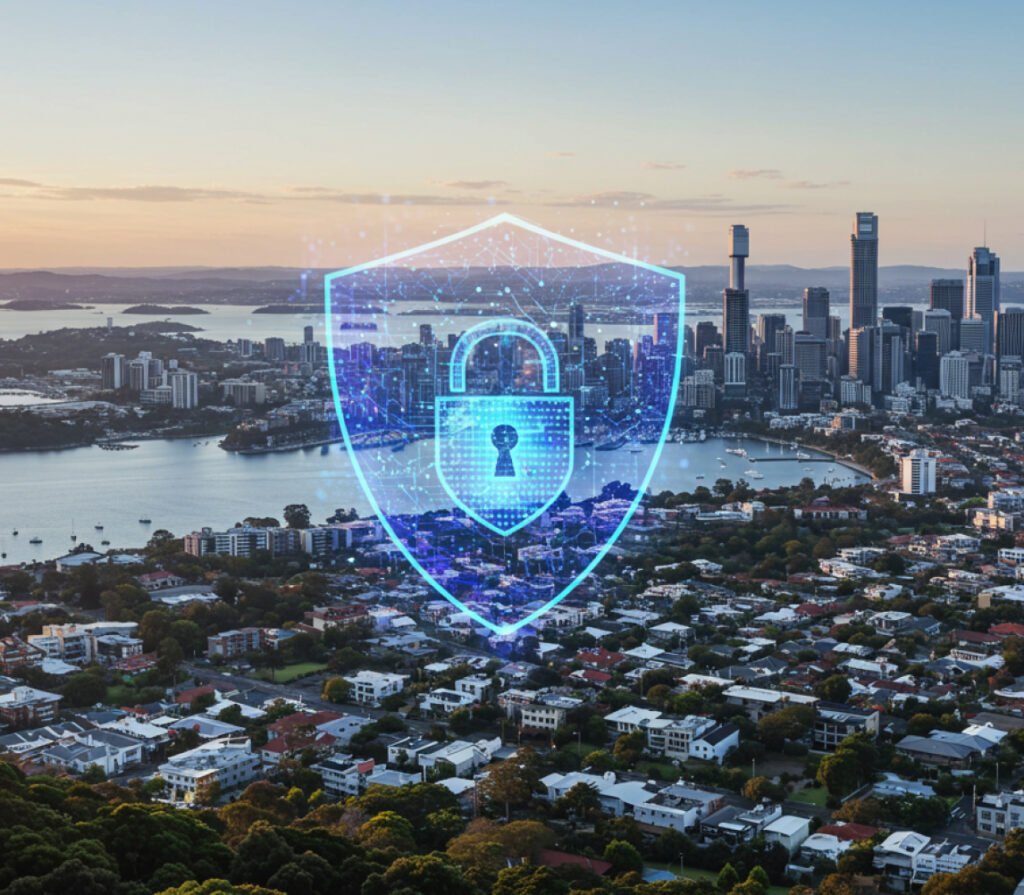

Cyber Security Services for North Shore Homes and Businesses

Cyber security for a small business means keeping your accounts, devices and backups in good order. It also means being able to show that clearly when an insurer or client asks.

Much of the work comes down to a handful of settings, checked and kept current.

Passwords and sign-in

Strong, unique passwords and a second step at login.

Updates

Software and devices kept up to date, so known faults are fixed sooner.

Backups

Copies kept apart from your main computers, and tested so you know they restore.

Access

Staff see what their job needs and nothing more.

Evidence

Clear answers for insurance renewals and client questionnaires.

Get help answering your questionnaire or call 02 9481 7309 to talk it through first. Looking for help at home instead? Call the same number, or see the section on keeping your home and family safer online below.

Online and IT security is a community concern.

Where can you get help across Sydney’s North Shore, Hornsby Shire and the Hills?

You can find us at 4 Myrtle Street, Normanhurst, and reach us from there across Sydney’s North Shore, Hornsby Shire and the Hills. You can bring a computer in, book a visit at home or the office, or start with a remote session.

Small businesses will find the most detail below. If you are looking for help at home, skip to the section on keeping your home and family safer online.

You do not need to know the technical terms to start. Tell us what you have been asked, or what has you worried. You will get an explanation in plain English.

What if a renewal form or client questionnaire lands on your desk?

For many small businesses, security becomes a priority on a particular day.

Insurance renewal

Your cyber insurance renewal arrives with a page of questions.

Client security form

A larger client sends you a supplier security form.

New system or adviser

A new accountant, bookkeeper or practice management system asks how your data is protected.

These forms can read as if you have an IT department.

Do you use multi-factor authentication, which is a second step when someone signs in?

Your answer may be yes, no or only for some staff.

If you are unsure, it is a good moment to get help, because the questions are specific and the right answers come from what is actually set up.

What are insurers and larger clients really asking for?

Many forms cover a similar handful of topics. You may be asked how your staff sign in, how quickly updates are applied and whether backups exist and have been tested. Other questions cover who can make changes to your systems and what happens if something goes wrong.

Many of those questions cover the same ground as the Essential Eight. It is a set of eight practical measures.

The Australian Signals Directorate developed them. The Australian Cyber Security Centre publishes them. In plain terms, the eight cover the following.

  1. 01Which programs may runOnly approved software is allowed to start (application control).
  2. 02Updating your applicationsFixes for the programs you use every day.
  3. 03Microsoft Office macro settingsLimits on small automatic scripts inside documents.
  4. 04Hardening everyday applicationsSwitching off risky features you rarely need (user application hardening).
  5. 05Limits on administrator accessFewer people can change settings or install software.
  6. 06Updating operating systemsFixes for Windows, macOS and similar.
  7. 07A second login stepMore than a password to get into an account (multi-factor authentication).
  8. 08Regular backupsCopies you can restore from when you need them.

The Essential Eight is not a legal requirement for a private business. It is a widely used Australian Government baseline.

Some government purchasing asks for it. Insurers and larger customers often ask about the same kinds of security controls. So its topics may look familiar in the forms you are sent.

That makes it a useful guide even when nobody has asked.

How do you answer the form accurately?

Forms like these are easier to answer once you can see what is actually set up. An answer that matches the facts is also one you can stand behind if an insurer asks about it later.

We help you answer the insurance renewal or client questionnaire in front of you. We aim to reduce your risk as we go.

Safeguard Your Business from Cyberattacks

What does help look like for a small business?

IT security for a small business is mostly steady upkeep. It includes finding weak spots before they cause trouble. It also includes getting help quickly if something has already gone wrong.

If you run a small practice, office or trade business, the work starts with a check of where you stand, then fixes for what it finds, and help if something goes wrong.

If your business also needs help day to day, IT support for small business covers the calls when something needs fixing or setting up. Remote IT support can fix many software faults without a visit.

A clear picture of where you stand

A vulnerability assessment is a check of your computers, network and software for weak points. These might be out-of-date programs or settings left on their defaults. You get a plain-English picture of where you stand, with recommendations for what to improve.

You decide what to do with it. You might fix everything at once, or pick the two or three changes that matter most for your next renewal.

Fixing what the check finds

We can then make the changes for you. That might include the following.

  • Second login step. Switching one on.
  • Backups. Setting up proper backups.
  • Administrator access. Tidying who has administrator access.
  • Security software. Installing it on your computers and laptops.

Help if something goes wrong

If you suspect a data breach, call early. We help you contain the problem and work out what was affected.

We recover lost data where that is possible. We then put measures in place to make a repeat less likely. We will tell you what can and cannot be recovered.

If you have been the victim of a scam, we can provide a detailed forensic report for your bank or insurance provider.

What if a scam or virus has already got in?

Some people come to us after something has already gone wrong. A computer that is slow, full of pop-ups or behaving strangely may have malware, which is harmful software. Our virus and malware removal service finds and removes it, including spyware and ransomware.

If a scam has reached your accounts, you do not have to untangle it alone. You can work out with us what was touched, get the computer cleaned, and learn what to change next.

Depending on what happened, lost files can often be brought back from the device, though no one can promise every file will be recovered. After an incident, the first step is finding out what has been lost.

Recover from Scams & Protect Your Data
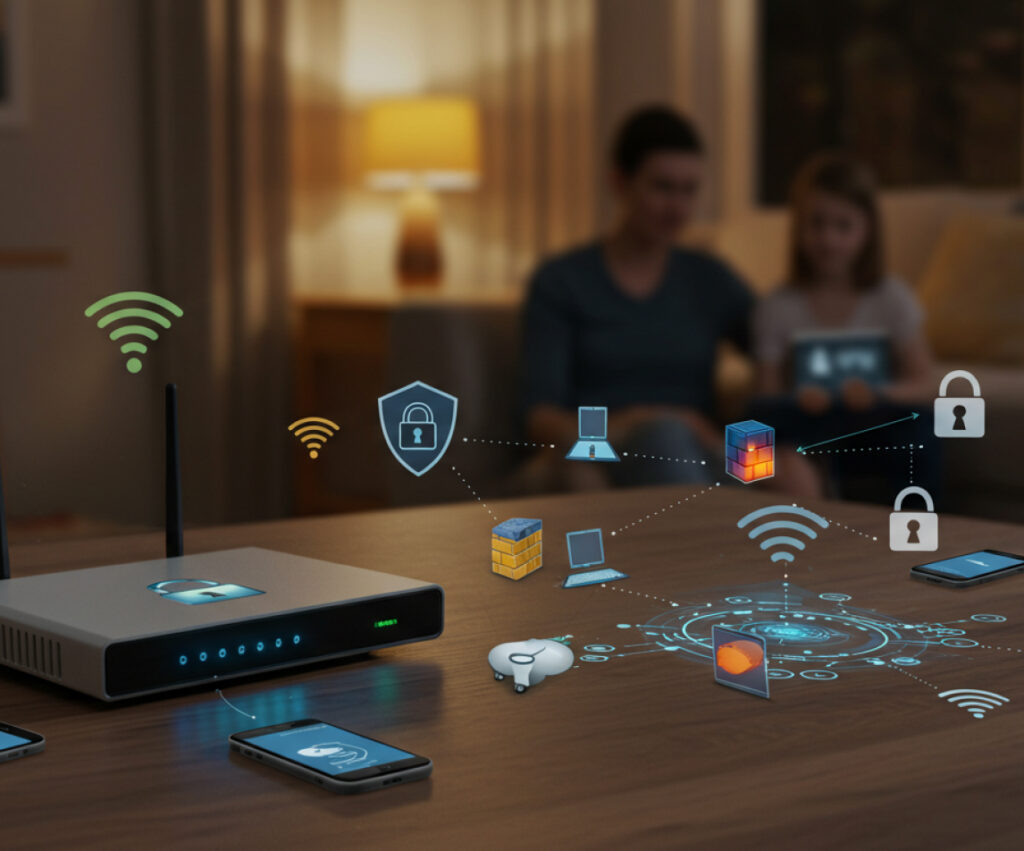
Gadgets and devices in an interconnected Smart Home

How can you keep your home and family safer online?

Many of the same ordinary steps that protect a business also help at home. Families have laptops, phones, tablets, smart televisions and a home network that all share one internet connection.

We can secure your home wifi and connected devices. We install security software on your computers and keep it current. You can also learn to spot a suspicious message, and you do not need to be technical to do any of this.

Online safety for the whole family is covered in personalised training. It takes in strong passwords, spotting scam emails and texts, and using social media with a little more care. Parents, grandparents and children can all take part.

If you are helping a parent or relative, ask how best to include them. For regular help at home, see our help at home page, or call 02 9481 7309 and talk it through with us.

Talk to us about securing your devices

How do you know if your computer or accounts need attention?

Any of these signs is worth a call.

  • Slow or unstable computers. Frequent crashes, freezes or very slow starts.
  • Unexpected pop-ups. Adverts or error messages you did not expect.
  • Changed browser settings. A different home page or search engine you did not choose.
  • Unfamiliar programs. Software or files you do not remember installing.
  • Odd account activity. Sign-in alerts, password reset emails or messages you did not send.
  • Locked or missing files. Trouble opening documents that worked yesterday.

Scam messages are written to look convincing, and careful people are caught by them. Call us and we will take a look.

Common Signs You Need Cybersecurity Help
Why You’ll Love Neighbourhood IT

See the Top 10 Reasons

Why You’ll Love Neighbourhood IT

graphic icon

See the Top 10 Reasons

Why You Need Neighbourhood IT

Why local people call us

The Neighbourhood IT team at work
expert support emoticon
Plain English

You get a plain-English explanation of what was found and what was done.

Peace of Mind
Based in Normanhurst

We are based in Normanhurst, close to the area you live and work in.
secure padlock emoticon
Beyond basic antivirus

We look at security beyond basic antivirus. Antivirus is one tool among several. So the work can cover how you sign in, update, back up and share access.

What Our Clients Say

I have been a customer of Laurence and his team for approx. 15 years now and they always have a quick response and fix to any problems that arise. Totally satisfied. Great work. Highly recommended.
Peter Bryan
Peter Bryan
Henry from Neighbourhood IT is always very friendly and prompt, solving any issues straight away.
Cathy Hopkins
Cathy Hopkins
Excellent service, friendly and helpful, solved our IT issues. Highly recommend.
Libby C
Libby C
My laptop's hard drive gave up the ghost and I needed to get back online. Darren from Neighbourhood IT diagnosed the problem and discussed with me options on how to remedy the situation. I picked up my laptop this afternoon and I'm back up and running.Thank you to Darren for his expertise and great customer service. I've found my IT Service provider.
Ben de Leon
Ben de Leon
Neighborhood IT have always been very efficient with sorting my business tech out as I am so computer illiterate. Henry is efficient and explains things simply, I would highly recommend them for any other business or personal needs.
Lara Watt
Lara Watt
What a great group of Technical persons in solving in my case computers. The ability of my Technician Henry to find a problem and describe the issue was certainly the way of knowing I have the right person to fix it. Henry arrived on time, found the issue quickly and returned my computer in a much better state than before,
Daryl Rickards
Daryl Rickards
js_loader

What do people ask about cyber security?

The common ones are malware (including ransomware) and scam emails that ask for passwords or payments. Another is an account taken over because of a weak or reused password. Updates and a second login step make many of them harder, and good backups help you recover.

No. For a private business it is not a law, but it is a widely used Australian Government baseline. Insurers and larger customers often ask about the same controls.

A vulnerability assessment can show where your business stands. You can also see what the form in front of you is really asking.

Slow performance, frequent crashes and unexpected pop-ups are common signs. So are a changed home page, unfamiliar programs and unusual account activity. If you notice them, stop entering passwords on that computer and contact us for malware removal and a clean-up.

Disconnect the computer from the internet, and contact your bank if payment details may be involved. Report the incident to the relevant authorities. Then get in touch with us so we can help you assess the damage, remove malware and recover what can be recovered.

Length matters. Use a long passphrase, avoid personal details and common words, and use a different password for each account. A password manager makes that practical, and a second login step adds another layer.

Yes. You can learn what to share, how to spot suspicious links and messages, and how to talk with children about staying safe online.

Get help with your form

If a renewal form or client checklist is sitting on your desk, we can help you answer it. If you simply want to know where your business or home stands, you can start there instead.

Get help answering your questionnaire, or ask about your cyber security. You can also call 02 9481 7309.